DISCOVER
Castro of Troña
- Image
- Image


Castro de Troña, s/n
36895 Ponteareas Pontevedra
Spain


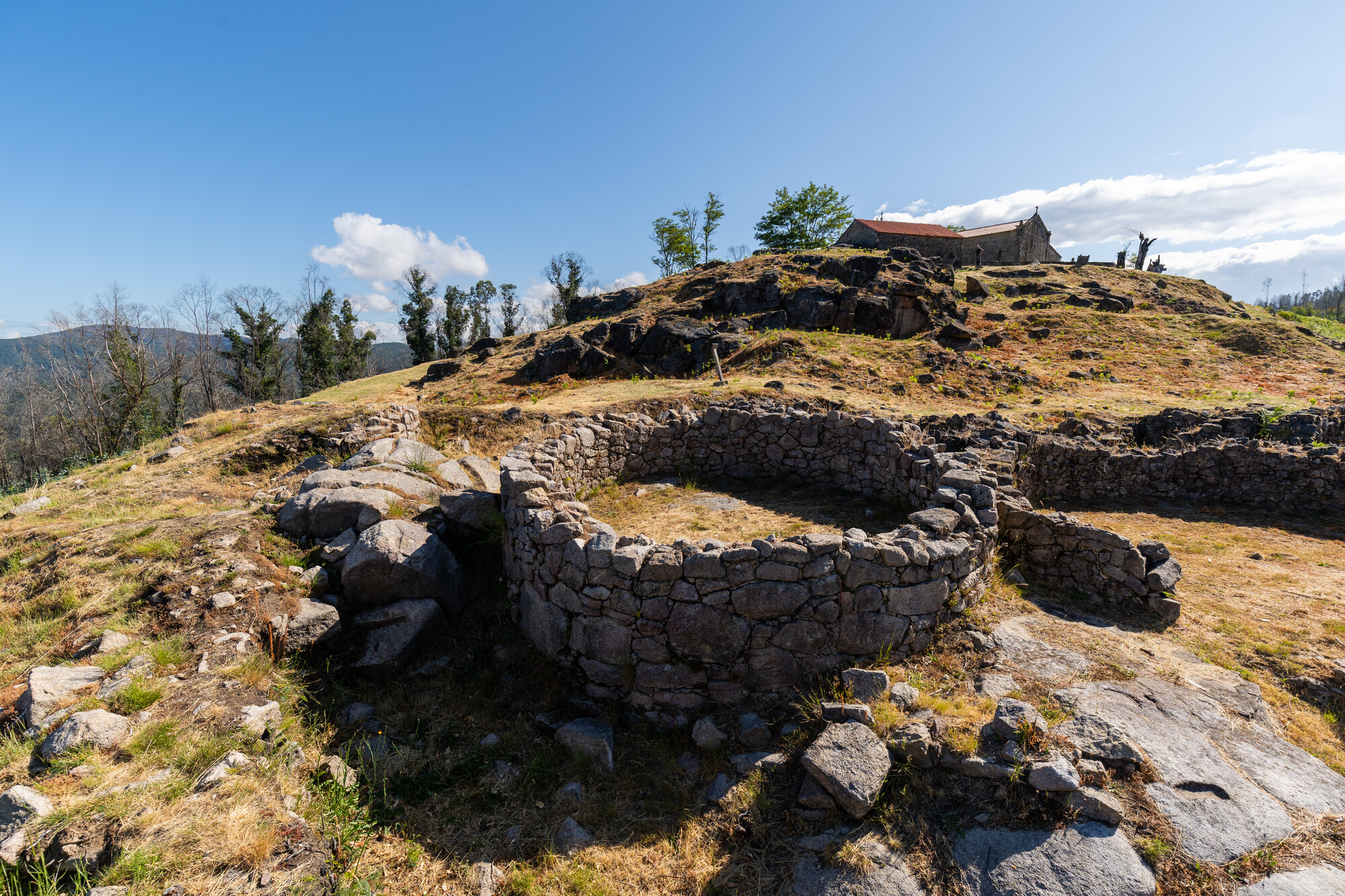
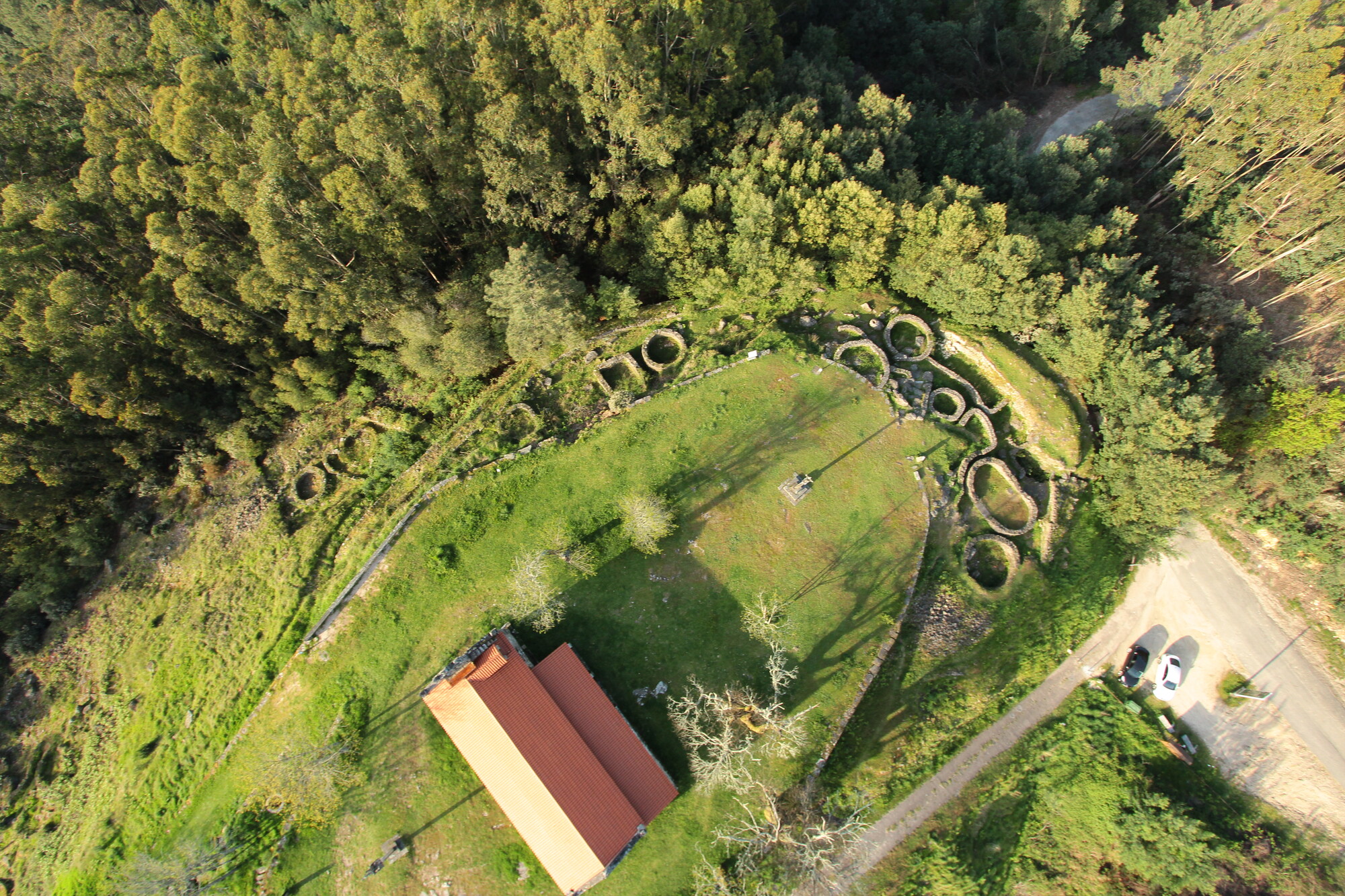
An oval-shaped fortified settlement featuring wide terraces on its western slope and a broad ditch carved into the rock on its eastern side. This hillfort may have been inhabited many centuries earlier, although the remains of the preserved buildings date back to just over 600 BC, when stone began to be used as a building material. Like many other hillfort settlements in Galicia, the Castro de Troña experienced its period of greatest prosperity between the 1st century BC and the 2nd century AD.
The main axes of the hillfort measure approximately 200 metres from east to west and 150 metres from south to north. It features a complex defensive system consisting of walls, ditches and ramparts. The thickness of these walls ranges from 1.5 to 5.5 metres, while their height varies between 2 and 5 metres. Particularly noteworthy is the defensive tower located on the eastern side of the first wall, one of the few known examples of its kind in northwestern Iberia. On the eastern side of the hillfort, there is a deep ditch measuring 18 metres in height and 10 metres in width at its base. Carved into the rock, it is now crossed by the track leading to the hillfort.
This defensive system is completed by two small ramparts made of stone and earth, which protect the northeastern side of the settlement. They are relatively small, measuring 6 metres in length and 3 metres in height. Around 30 structures have been excavated at the Castro de Troña. They display a variety of architectural layouts, including circular, elliptical, square and rectangular floor plans.
Of particular interest is an important petroglyph depicting a snake in a heraldic position, known as the Serpe de Troña (Snake of Troña), carved into the vertical face of a rock forming part of one of the hillfort's structures.
Vigo